
COMPASS Reading Assessment Review Module
To help you be successful, proper course placement is important in fostering the academic success of students at Triton College. In order to ensure you enroll in courses that match your individual skill level and prior preparation, all new students take placement tests in Writing, Reading and Mathematics. The placement test results are used to aid academic advisors as they help students plan their courses. Not all students are required to take the placement test. Upon admission to the college, Admissions office personnel, using specific waiver criteria, determine whether you are required to take the placement test.
This module reviews the necessary information which will help prepare you to take the COMPASS® Reading placement assessment. The COMPASS® assessment is designed to determine your skill level for college reading. Taking the assessment doesn't mean that you've 'passed' reading but your score indicates which courses you can enroll in at Triton. Since the score you receive will help determine which courses you should take, it's important for you to take the assessment seriously.
This review module includes an overview of effective reading strategies that will help prepare you to take the COMPASS® assessment. The review includes sample test questions similar to the kinds of questions you are likely to see when you take the actual COMPASS® assessment. Since these are practice exercises, you will answer questions but you won't receive a real score and you'll be able to determine your progress as you go.
Once you're ready to take the actual COMPASS® assessment, you can contact assessment services to schedule your appointment. Remember, the computerized assessment is untimed—that is, you may work at your own pace so be sure to answer all questions even if you're not sure of the answer. After you complete the assessment, you can get a score report to help you make appropriate choices when you register for college classes.
We hope you benefit from this review material, and we wish you success as you pursue your education and career goals!
Taking the COMPASS® assessment requires you to be an active reader. What is an active reader? Active readers pay close attention to what they're reading in order to make the material meaningful. This means you can't rush through the material or read the information slowly. When you read slowly you've forgotten the details at the beginning by the time you've reached the end. Active reading requires you to do several things.
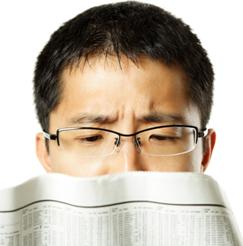 First, you must ask questions about the information you're reading.
By asking yourself questions as you read you keep yourself alert and focused to the author's message and purpose for writing the information.

Second, if you're not sure what the information in the passage means go back and reread the confusing parts.
Finally, think about what the passage is about.
a. Recognize main ideas and supporting details of paragraphs and passages
b. Identify important factual information
c. Identify relationships among different components of textual information
2. Reasoning Skills - Test items that focus on reasoning skills require students to determine implicit meanings and to go beyond the information that is explicitly presented, such as,
a. Ability to determine meaning from context
b. Infer main ideas and relationships
c. Generalize from given information and draw conclusions or make predictions
d. Draw appropriate conclusions
e. Make appropriate comparisons
Understanding the main idea of a reading passage helps you determine what the passage is about. You should be able to answer the question, "what is the point of this information?" In order to find the main idea of a passage you have to do the following:
In order to fully understand a passage you must understand the details that support the main idea. The supporting details will provide additional information about the main idea. This information may be presented as facts, statistics, examples, or a definition, etc. all of which can support the main idea.
For example, if someone were to ask you why you purchased your new car (main idea) you would communicate your 'examples' for the purchase by using some of the following details:
Many times the ideas expressed in the text may be the opinions of the writer, not actual facts based on evidence. Active readers must determine the difference between the factual content and the author's opinion. Merriam Webster's Dictionary defines fact as "something that has actually happened; existed; or statements based in truth or reality." On the other hand, Merriam Webster's Dictionary defines opinion as something that "indicates a view, belief which is stronger than an impression, sentiment, or conception."
When an author is expressing an opinion they may use specific words or phrases which indicate which statements are opinion, such as,
On the other hand, the author may use specific words or phrases which indicate which statements are facts, such as,
FACT and OPINION:
It has been said the President Obama is very technically savvy because he is the first President to carry a smartphone with Internet and E-mail access but many feel that all this technology isn't necessary.
Understanding the relationships of information within the passage will help you understand the information presented in the passage. Identifying the relationships that exist between within sentences and between sentences can help you identify the author's purpose and the main idea and supporting details of the passage. Relationship patterns can usually be determined by specific words within the passage that are used to make logical connections between the information that's presented. For example, comparison and contrast tells readers when something is similar or different and contains transitions words such as those listed below. You can look for clue or transition words to help you determine the relationships in a passage. Such cause-effect clue words are:
• A few examples of words that indicate a comparison include:
o both
o likewise
o similar
o just as
o alike
• A few examples of words that indicate contrast include:
o although
o despite
o by contrast
o unlike
o yet
But sometimes you must infer the relationship that is present in the passage. For example, a passage about global warming (cause) may list a variety of reasons or effects such as too much driving, people don't recycle, water pollution, etc. In this instance you will combine the details in order to determine the relationship and where the author is going with the information presented.
Additional relationship patterns include:
• time order - tells readers when something has happened and contains transition words such as: first, second, third, before, after, during, etc.
• space order or description - tells readers where something is and contains transition words such as: below, above, behind, in front of, etc.
• definition - tells readers what specific words or phrases mean and contains transition words such as: means, defined as, consists of, is called, etc.
• example - provides readers with a concrete details of the idea the author is trying to communicate and contains transitions words such as: for instance, such as, for example, etc.
• cause-effect - relationships exist when an event or something occurs that causes something else to happen, a cause makes something happen; an effect is what happens as a result of that cause.
• classification - tells readers there are a variety or lists of things and contains transitions words such as: several kinds, different types, number of..., etc.
During many reading activities you'll encounter words or terms that are unfamiliar but critical to your understanding of the passage. Identifying the context clues within the passage will help improve your comprehension of the material. Context clues are hints the author provides to determine the meaning of a word or term and are usually located in the same sentence or surrounding sentences. There are four types of context clues:
• synonyms
• antonyms
• examples
• general
Synonyms are words that have a similar or same meaning as the unknown word or phrase. For example, small is a synonym of little. Signal words that indicate the author is providing an idea what the unknown word may mean include,
• like
• also
• as well as
• in other words
• similar to
Antonyms are words that have the opposite meaning of the unknown word or phrase. For example, small is an antonym of tall. Signal words that indicate the author is providing a contrasting idea regarding the meaning of the unknown word may include,
• on the other hand
• in contrast
• although
• unlike
• however
Examples are words that may provide a description or explain the unknown word, phrase, or idea. For example, in reading a sentence about the weather you may see something like the following, My sister is a cautious person, for example, she never goes out after dark. In this example the phrase, "for example" serves as the context clue because it provides the example which describes the word "cautious". Signal words that indicate the author is providing examples regarding the meaning of the unknown word may include,
• for example
• for instance
• such as
• to illustrate
General context clues may be more difficult to locate. You will need to use your background knowledge and determine what you know about the topic already and what makes the most sense in terms of the additional words or phrases surrounding the unknown word. For example, "Mandatory driving tests should be required for everyone over the age of 70 without exceptions." If you didn't know what the word "mandatory" meant you can use your background knowledge and perhaps personal experience of seeing older drivers on the road and the difficulties they may experience while driving. The phrase, "without exceptions" also helps you understand the meaning of the word.
Many times writers don't tell you exactly what something may mean or how things in a story relate. The writer will use specific details to help you make an inference to the meaning but you have to understand how to use the clues. Making inferences or inferring the meaning of a passage can be like being a detective; you have to look at all the details and understand how they fit together to produce meaning.
Active readers are able to apply their own knowledge about specific topics and apply that information to what they are reading. This is why reading often and reading a variety of material is important, inferring is only beneficial if you understand a wide variety of concepts. For example, if you don't read a lot and you think the world is flat you're going to have trouble understanding information that refers to the earth as a round sphere.
In order to generalize the information you've read you need to make sure you understand which idea in the passage is the main idea and which statements support that idea. Based on these details, you'll need to draw a conclusion or make a prediction regarding the overall purpose of the passage. Making predictions allows you to use your background knowledge and the information presented in the text and think about what may be the purpose for providing the information in the passage.
When you draw a conclusion you are essentially adding information you know to what's presented in the passage. What 'gaps' does the author leave in the passage that you will need to fill in based on what you may already know.
You can also draw conclusions when taking a test. You will need to look at the answer responses provided and determine which choices are the least likely. Re-read the passage to determine if the remaining response fits with the information given.
The reading comprehension items in the COMPASS assessment fall into two general categories: (1) referring items: which are questions that focus on information that is explicitly stated (obvious) and determine the meaning of words based on the information clearly presented in the passage and (2) reasoning items: which are questions that focus on the implicit (not obviously stated) meaning of the passages and requires you to draw conclusions, comparisons, and generalizations about the information you've read. The reasoning questions also ask you to determine the specific meaning of difficult, unfamiliar, or ambiguous words based on the surrounding information.
For example, read the passage below. Examples of both types of questions are included. Once you've read the information use the active reading strategies we've discussed to determine how you would answer each question below. Click the 'next page' button at the bottom of the page to begin the practice quiz for this passage.
Regular tune-ups of your heating system will cut heating costs and will most likely increase the lifetime and safety of the system. When a service technician performs a tune-up, he or she should test the efficiency of your heating system. The technician should measure the efficiency of your system both before and after servicing it and provide you with a copy of the results. Combustion efficiency is determined indirectly, based on some of the following tests:
1) temperature of the flue (or chimney); 2) percent carbon dioxide or percent oxygen in the atmosphere; 3) presence of carbon monoxide in the atmosphere; and 4) draft. Incomplete combustion of fuel is the main contributor to low efficiency. If the technician cannot raise the combustion efficiency up to at least 75% after tuning your heating system, you should consider installing a new system or at least modifying your present system to increase its efficiency.
(Adapted from Alex Wilson and John Morrill, Consumer Guide to Home Energy Savings. ©1993 by the American Council for an Energy-Efficient Economy.)
Reasoning Item
1. The passage suggests that the presence of carbon monoxide in the atmosphere:
A. can provide information regarding combustion efficiency.
B. is found in 75% of heating systems tested.
C. can be reduced by decreasing heating system draft.
D. is the main cause of low efficiency in heating systems.
E. is more reliable than flue temperature as an indicator of combustion efficiency.
Referring Item
2. According to the passage, when performing a tune-up of a heating system, the service technician should:
A. ensure that the combustion efficiency is at least 25%.
B. modify the heating system before initially measuring efficiency.
C. measure combustion efficiency both before and after servicing the system.
D. provide his or her supervisor with a written report of the system's efficiency.
E. ignore the age of the heating system.
Let's see what you know:
Regular tune-ups of your heating system will cut heating costs and will most likely increase the lifetime and safety of the system. When a service technician performs a tune-up, he or she should test the efficiency of your heating system. The technician should measure the efficiency of your system both before and after servicing it and provide you with a copy of the results. Combustion efficiency is determined indirectly, based on some of the following tests: 1) temperature of the flue (or chimney); 2) percent carbon dioxide or percent oxygen in the atmosphere; 3) presence of carbon monoxide in the atmosphere; and 4) draft. Incomplete combustion of fuel is the main contributor to low efficiency. If the technician cannot raise the combustion efficiency up to at least 75% after tuning your heating system, you should consider installing a new system or at least modifying your present system to increase its efficiency.
(Adapted from Alex Wilson and John Morrill, Consumer Guide to Home Energy Savings. ©1993 by the American Council for an Energy-Efficient Economy.)
Now let's move on to the sample questions. You will not be able to revise or retake a quiz unless you start the module over. Go through all the sample passages before you start over. Your score is available throughout the practice or you can click the "SCORE" at the top of the page in the upper-right hand corner.
What Methods Do Andean Farmers Use?
Public debate around climate change and its effects on agriculture tends to focus on the large-scale industrial farms of the North. Farmers who work on a small scale and use traditional methods have largely been ignored. However, as the world slowly comes to terms with the threat of climate change, Native farming traditions will warrant greater attention.
In the industrial model of agriculture, one or two crop varieties are grown over vast areas. Instead of trying to use local resources of soil and water optimally and sustainably, the natural environment is all but ignored and uniform growing conditions are fabricated through large-scale irrigation and the intensive use of artificial fertilizers and pesticides. For example, a handful of basically similar potato varieties, all of which require nearly identical soil conditions, temperature, rainfall, and growing seasons, account for almost all global production. When these global crops are no longer suited to the environment in which they are grown, when their resistance to disease and pests begins to fail, or the climate itself changes, the best way to rejuvenate the breeding stock will be to introduce new genetic material from the vast diversity of crop varieties still maintained by indigenous peoples.
In contrast to the industrial model, Andean potatoes and other Andean crops such as squash and beans grown by Quechuan farmers exhibit extraordinary genetic diversity, driven by the need to adapt crops to the extraordinary climatic diversity of the region. Along the two axes of latitude and altitude, the Andes encompasses fully two-thirds of all possible combinations of climate and geography found on Earth. The Andean potato has been adapted to every environment except the depth of the rainforest or the frozen peaks of the mountains. Today, facing the likelihood of major disruptions to the climatic conditions for agriculture worldwide, indigenous farmers provide a dramatic example of crop adaptation in an increasingly extreme environment. More importantly, Native farmers have also safeguarded the crop diversity essential for the future adaptations.
(Adapted from Craig Benjamin, "The Machu Picchu Model: Climate Change and Agricultural Diversity." © 1999 by Craig Benjamin.)
Fortune Tellers
A young couple entered the restaurant in Andy's view. They were holding hands. Andy sat back down in his chair. He felt sick. He turned and faced his father, who was eating xôi.
"What's the matter, son?" asked his father. "I thought you were going to the birthday party."
"It's too late."
"Are you sure?"
Andy nodded. He looked at the plate of xôi. He wanted to bury his face in it.
"Hi, Andy." A voice came from behind.
Andy looked up. He recognized the beautiful face, and he refused to meet her eyes. "Hi, Jennifer," muttered Andy, looking at the floor.
"You didn't miss much, Andy. The party was dead. I was looking for you, hoping you could give me a ride home. Then I met Tim, and he was bored like me. And he said he'd take me home…. Andy, do you want to eat with us? I'll introduce you to Tim."
Andy said, "No, I'm eating xôi with my father."
"Well, I'll see you in school then, okay?"
"Yeah." And Andy watched her socks move away from his view.
Andy grabbed a chunk of xôi. The rice and beans stuck to his fingernails. He placed the chunk in his mouth and pulled it away from his fingers with his teeth. There was a dry bitter taste. But nothing could be as bitter as he was, so he chewed some more. The bitterness faded as the xôi became softer in his mouth, but it was still tasteless. He could hear the young couple talk and giggle. Their words and laughter and the sounds of his own chewing mixed into a sticky mess. The words were bitter and the laughter was tasteless, and once he began to understand this, he tasted the sweetness of xôi. Andy enjoyed swallowing the sticky mess down. Andy swallowed everything down—sweetness and bitterness and nothingness and what he thought was love.
Adapted from Nguyen Duc Minh, "Fortune Tellers." in the collection American Eyes.©1994 by H. Holt
Cowboys
When I'm in New York but feeling lonely for Wyoming I look for the Western movie ads in the subway. But the men I see in those posters with their stern, humorless looks remind me of no one I know in the West. In our earnestness to romanticize the cowboy we've ironically disesteemed his true character. If he's "strong and silent" it's because there's probably no one to talk to. If he "rides away into the sunset" it's because he's been on horseback since four in the morning moving cattle and he's trying, fifteen hours later, to get home to his family. If he's "a rugged individualist" he's also part of a team: ranch work is teamwork and even the glorified open-range cowboys of the 1880s rode up and down the Chisholm Trail in the company of twenty or thirty other riders. It's not toughness but "toughing it out" that counts. In other words, this macho, cultural artifact the cowboy has become is simply a man who possesses resilience, patience, and an instinct for survival. "Cowboys are just like a pile of rocks—everything happens to them. They get climbed on, kicked, rained and snowed on, scuffed up by the wind. Their job is 'just to take it,'" one old-timer told me.
(Adapted from Gretel Ehrlich, The Solace of Open Spaces. ©1985 by Gretel Ehrlich.)
Zora Neale Hurston
In the 1930s, why did author Zora Neale Hurston choose Eatonville, Florida, to be the first source for her collection of folklore?
I was glad when somebody told me, "You may go and collect Negro folklore." In a way, it would not be a new experience for me. When I pitched headforemost into the world I landed in the crib of Negroism. It was fitting me like a tight chemise. I couldn't see it for wearing it. It was only when I was off in college, away from my native surroundings, that I could stand off and look at my garment. Then I had to have the spy-glass of anthropology to look through.
I was asked where I wanted to work and I said, "Florida. It's a place that draws people—Negroes from every Southern state and some from the North and West." So I knew that it was possible for me to get a cross section of the Negro South in one state. And then I realized that I felt new myself, so it looked sensible for me to choose familiar ground.
I started in Eatonville, Florida, because I knew that the town was full of material and that I could get it without causing any hurt or harm. As early as I could remember, it was the habit of the men particularly to gather on the store porch in the evenings and swap stories. Even the women would stop and break a breath with them at times. As a child when I was sent down to the store, I'd drag out my leaving to hear more.
Folklore is not as easy to collect as it sounds. The ideal source is where there are the fewest outside influences, but these people are reluctant at times to reveal that which the soul lives by. I knew that even I would have some hindrance among strangers. But here in Eatonville I knew everybody was going to help me.
(Adapted from Zora Neale Hurston, Mules and Men. ©1935 by J.B. Lippincott Company.)
COMPASS® is not used like a traditional test. There is generally no "passing score." Rather, COMPASS® scores indicate areas in which you are strong and areas in which you may need additional help. Thus, COMPASS® can identify problems in major skill areas before those difficulties disrupt your educational progress, giving you the opportunity to prepare more effectively for needed courses. You can use scores from COMPASS® tests to prepare for your course work to ensure your classes are appropriate, relevant, and meaningful for your ability level. While this module is for practice purposes only, you can use the scores below to get an indication of how you may perform on the actual reading skills portion of the COMPASS® exam.
How'd you do on the practice passage quizzes? Let's take a look at what your possible score could indicate. Click the "SCORE" button in the upper-right hand corner of your screen to review your total score.
12 - 15: Based on your practice performance you may receive a 4 on the actual COMPASS assessment which indicates you may be ready for college level reading.
10 - 11: Based on your practice performance you may receive a 3 on the actual COMPASS® assessment which indicates you may be ready for Introduction to College Reading Level 2, RHT086
< 9: Based on your practice performance you may receive a 2 on the actual COMPASS® assessment which indicates you may be ready for Introduction to College Reading Level 1, RHT085.
Again, these are just the possible outcomes you might expect when you actual take the COMPASS® assessment. Just remember to take the test seriously and don't rush through your responses.
Now that you've completed the review material, schedule your testing time with the assessment services office. If you think you need more information about reading and the comprehension process make an appointment with an English department instructor or visit the Academic Success Center. Once you've taken the COMPASS® Placement Assessment talk to your counselor about your score to determine your next step. Good Luck!!!
Please take a few minutes and complete our anonymous survey and remember these test taking tips.
Thanks